
In many of my writings, I have used the word Serendipity — a chance occurrence in a happy or beneficial way. It is not just a chance occurrence that I happen to use the word often. It is the fact that I have had many serendipities taking place around me that I have now developed an instant déjà vu feeling about them, and during the moment of elation about the discovery, my mind instantly spells out that this is another serendipity, as there is no better word to describe the feeling. The most recent addition to the list is the haikus, written by a 17th-century poet and Buddhist monk, Matsuo Basho.
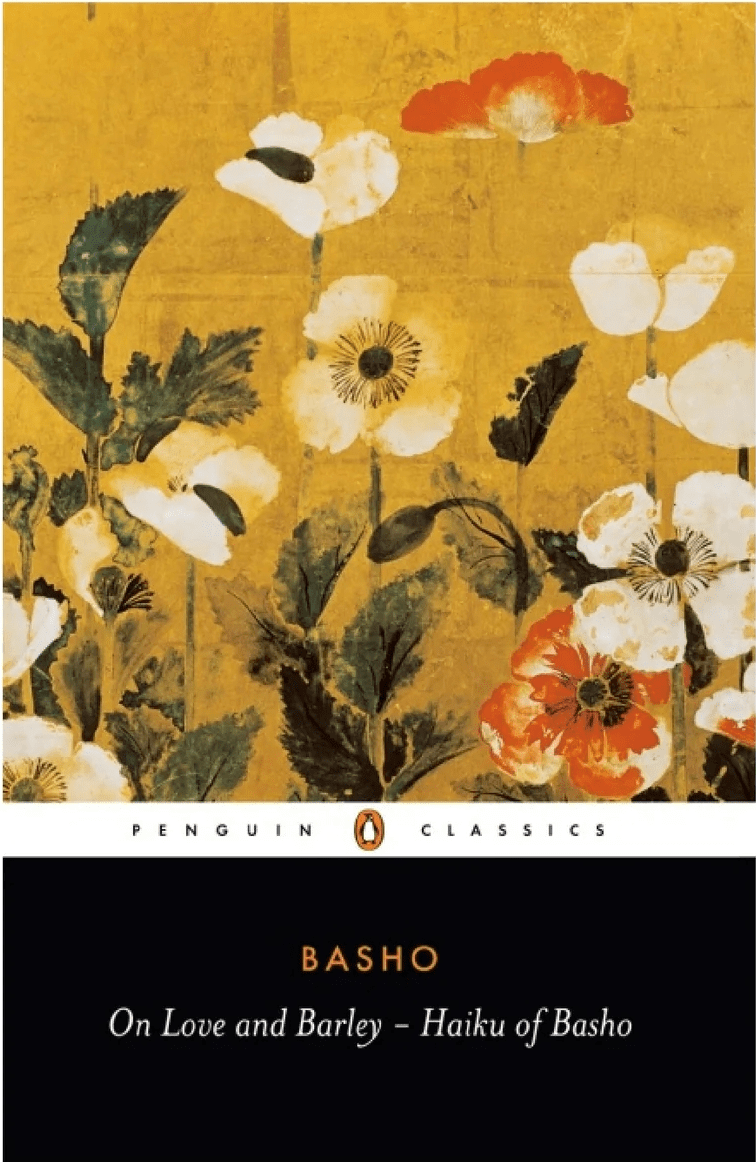
The book I discovered is called ‘On Love and Barley: Haiku of Basho’, translated by Lucien Stryk. The introduction gives a detailed overview of Basho’s life, his thought processes, and a glimpse of the world of haiku. Without regurgitating the details from the book, Basho was a monk and a post, living near Kyoto in 17th century Japan, and he travelled most of his life. Basho is considered one of the past masters of haiku writing, depicting a contemporary rural Japanese life he witnessed during his travels.
The translator pointed out that the essence of Basho’s haikus is centred around the Japanese word karumi — lightness of the weight of things. It’s the sense of lightness how the poet binds the two parts of a haiku together. Using a different context, Karumi is similar to what is referred to as dim mak, or touch of death in martial arts — the ultimate effect is delivered without the artist being seen to be making an effort. The other facet of haikus from Basho reflects the other value he upheld throughout his life as a zen Buddhist — the sense of non-belonging, or Nirvana.
With these two ultimate poetical values exuding throughout the works of Basho, as I delved more into the world of haiku, I could instantly notice karumi or the lightness of the associations. It also felt as if Basho wanted the reader to look as, not at, the simple phenomena unfurling around us and revel at them. Leaving behind the poetic and allegorical values aside, the poems depicted life in 17th century Japan — imageries that are a world apart, not just geographically, but also in time.
Perhaps it is unjust to evaluate life from the perspective of a zen master, who practises disassociation from our wishes and desires, from love and sorrows alike, adopting spiritual over the materialistic world. It is this striking difference from our present worldview that caught my attention and teleported my mind back to an era where, despite the sense of non-attachment by the poet, one cannot miss the simplistic charms and wonders of life from a bygone period. Whether it was how a young boy looks at the moon whilst working in the early morning hours in the field, or boating in a lake in the middle of the night to watch fireflies, or just the unmissable joy about spring and cherry blossoms or plum trees — within the three lines Basho painted a vivid picture of the nature that surrounded him, and the effect is magical.
The book contained nearly 250 chosen haikus. It is worth sharing a few here to present the essence of the mastery of Basho.
Husking rice,
a child squints up
to view the moon
Spring air –
woven moon
and plum scent
Summer Grasses
all that remains
of soldiers’ dreams
Rain-washed
Camelia – as it
falls, showers
Early autumn –
rice field, ocean
one green.
Beyond waves,
reaching far, the
cuckoo’s song
Summer moon –
clapping hands,
I herald dawn
Firefly-viewing –
drunken steersman,
drunken boat
Orchid – breathing
incense into
butterfly’s wings
Rock azaleas,
flushed red
by cuckoo’s cry
I would particularly mention one last haiku separately, as it is known to have been created by Basho on his deathbed, his last ever haiku. One cannot miss the philosophical undertone as if he accepted death, and as the perennial traveller, he was ready to transcend into the next world.
Sick on a journey –
over parched fields
dreams wander on
We now live in a world full of materialistic charms, especially in the West, and a large part of the rest of the world blindly emulates that. Thrill-seeking has become a hobby as the available means of entertainment and pleasure fail to stimulate the minds. Reading Basho’s haikus can definitely help us refocus on the simple joys of nature that surround us — nature that we are so keen to destroy. Basho’s haikus were meant to be based on subtlety, the lightness of Karumi, and the non-attachment of Nirvana. Ironically, when we read them many centuries later, and in a different world, although we can observe the weightlessness, the non-attachment no longer works in our minds. The imageries are so arcane in the modern world, that they bind us, hypnotise us to that universe Basho created in his haikus. Perhaps we need to practice spirituality to be able to extract ourselves from these effects. We could then reapply the non-attachment into our surroundings and continue Basho’s legacy. Above all, it will sharpen our senses, making us look for subtlety and finesse, wonder at the abundant, simple things — watch the world through a child’s eyes.
I started this piece by talking about Serendipity. In the end, searching for the ability to be wondered is, in fact, searching for Serendipity — looking for the little magical things that are happening around us all the time, and being marvelled by them. This is the best gift from Basho to his disciples and readers. I’ll end with one of my favourite haikus of recent times; it neither has the Karumi, nor does it exude the deftness or non-attachment of Basho, but it makes up for the satirical values:
A lost, drunk Uncle
This is copied from a tweet on the free U2 album with the new iPhone 6
Coming back from the Toilet,
Climbing in my bed.
 Pensées...Rêves...Cauchemars...Éspoirs